 Emergency Cooling
Refrigerator Not Cooling
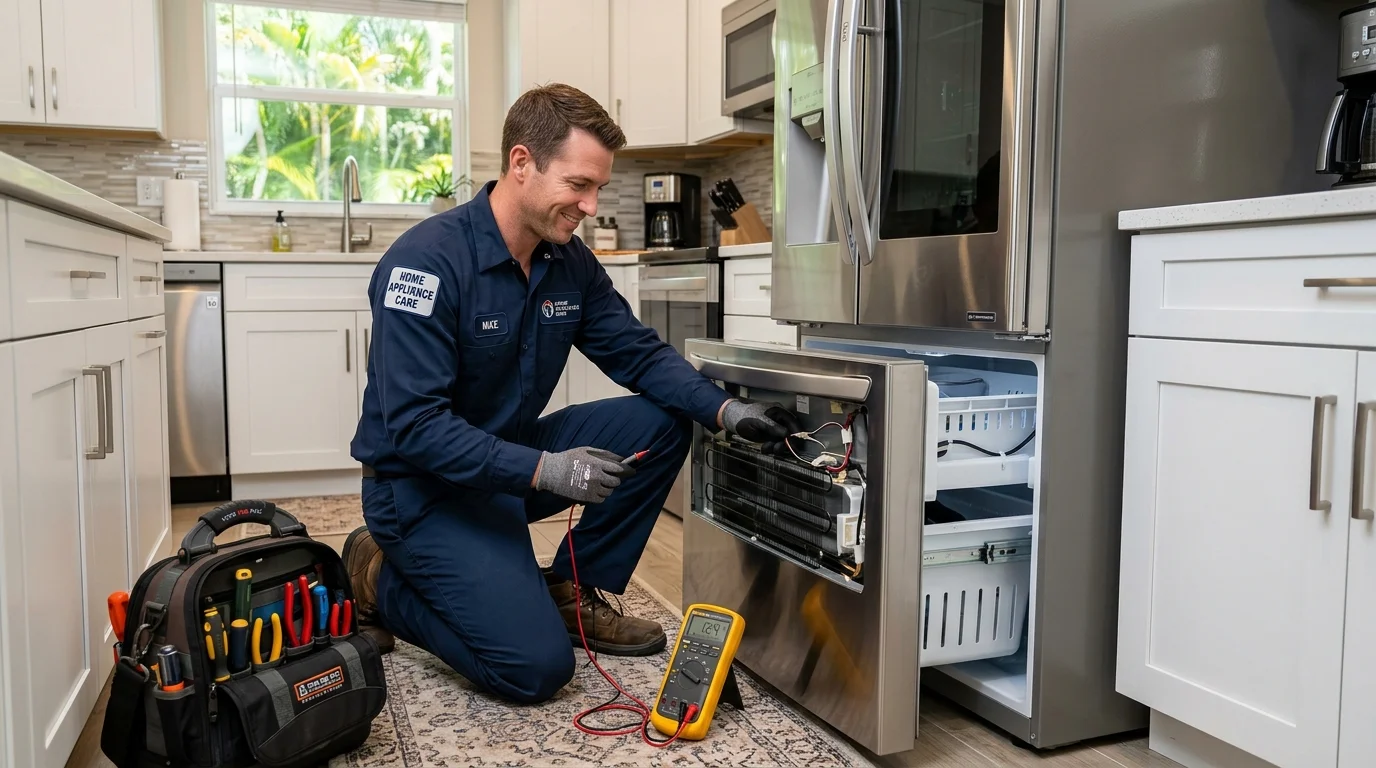
Multimeter diagnostic testing for failed evaporator fan motors, burnt PTC start relays, seized compressors, and frosted evaporator coils. Same-day restoration across Clearwater.
Learn More →
When your refrigerator stops cooling in the Florida heat, food spoils in hours. We connect you immediately with screened, EPA 608 certified local technicians stationed in Clearwater for rapid same-day diagnosis, upfront flat-rate pricing, and honest repairs backed by warranty.
Professional refrigerator repair in Clearwater, FL addresses non-cooling compartments, frozen ice makers, compressor lockups, and defrost drain water leaks. Most standard repairs (start relays, evaporator fans, defrost heaters, or water valves) cost between $150 and $350. The initial diagnostic fee ($79–$99) is 100% credited toward completed repairs. Dispatched independent technicians carry genuine OEM replacement parts to resolve over 85% of cooling failures on the first visit.
We provide dedicated repair disciplines designed to isolate mechanical failures, verify sealed system pressures, and restore safe food storage temperatures immediately.
Emergency Cooling
Multimeter diagnostic testing for failed evaporator fan motors, burnt PTC start relays, seized compressors, and frosted evaporator coils. Same-day restoration across Clearwater.
Learn More →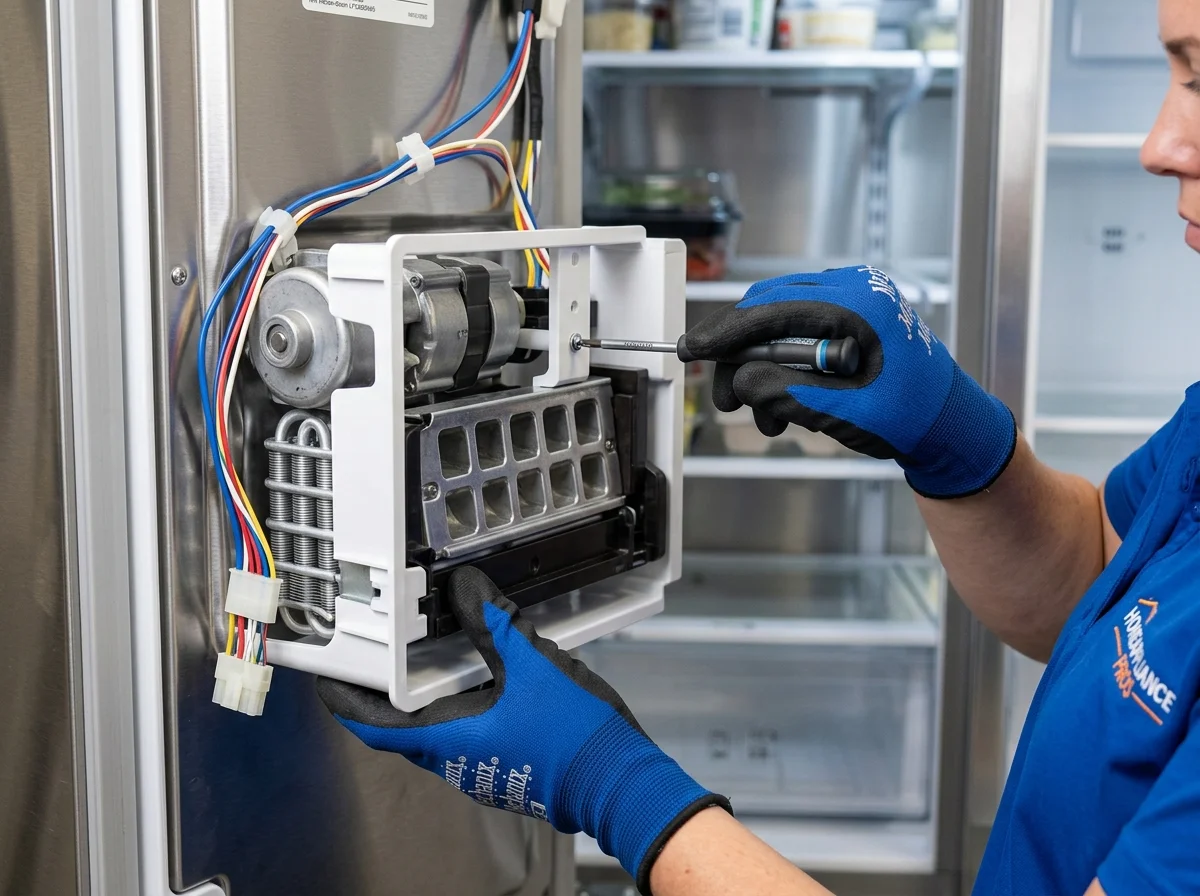 Ice Room Fix
Resolving frozen auger drives, jammed ejector blades, low water pressure, and continuous ice room freezing. Genuine OEM replacement assemblies for all brands.
Learn More →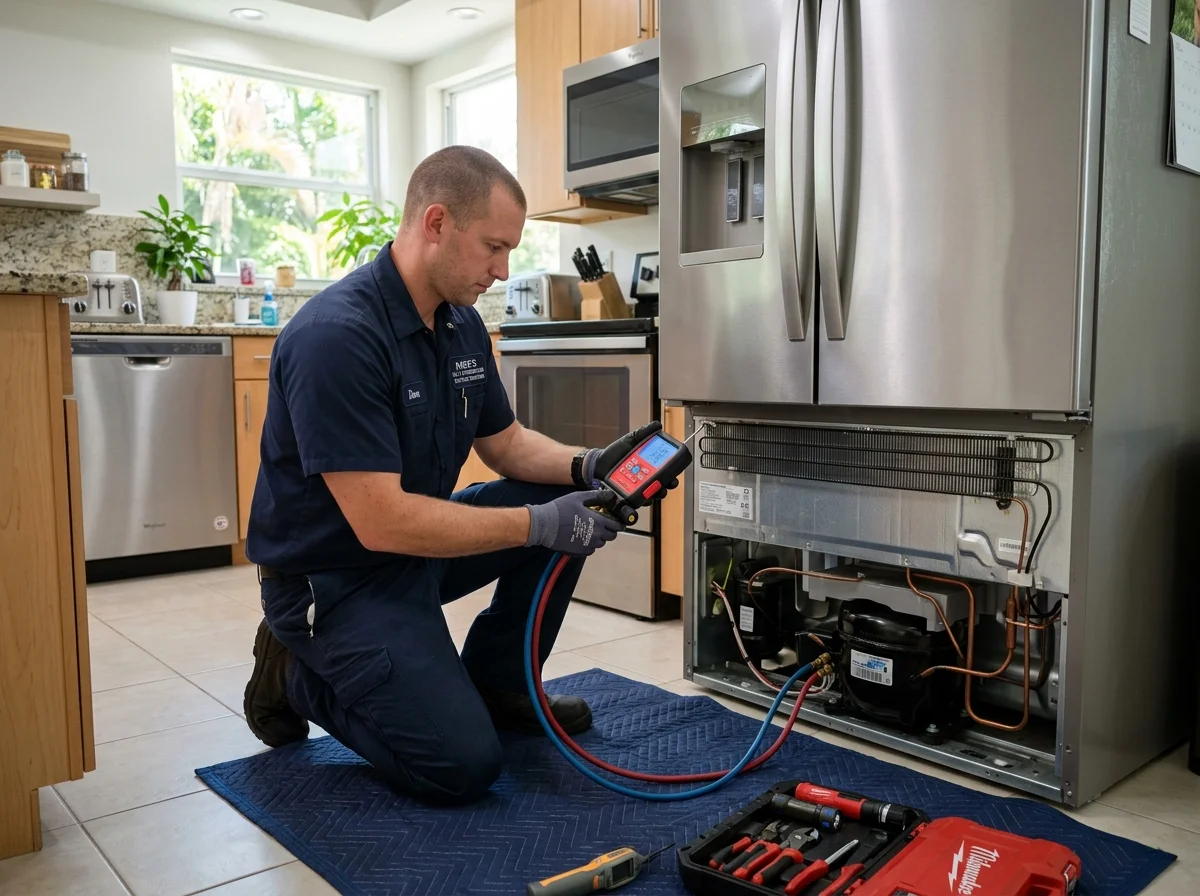 EPA 608 Certified
EPA Section 608 certified recovery, nitrogen-purged copper brazing, liquid line filter drier installation, and digital micron vacuum evacuation for R134a and R600a systems.
Learn More →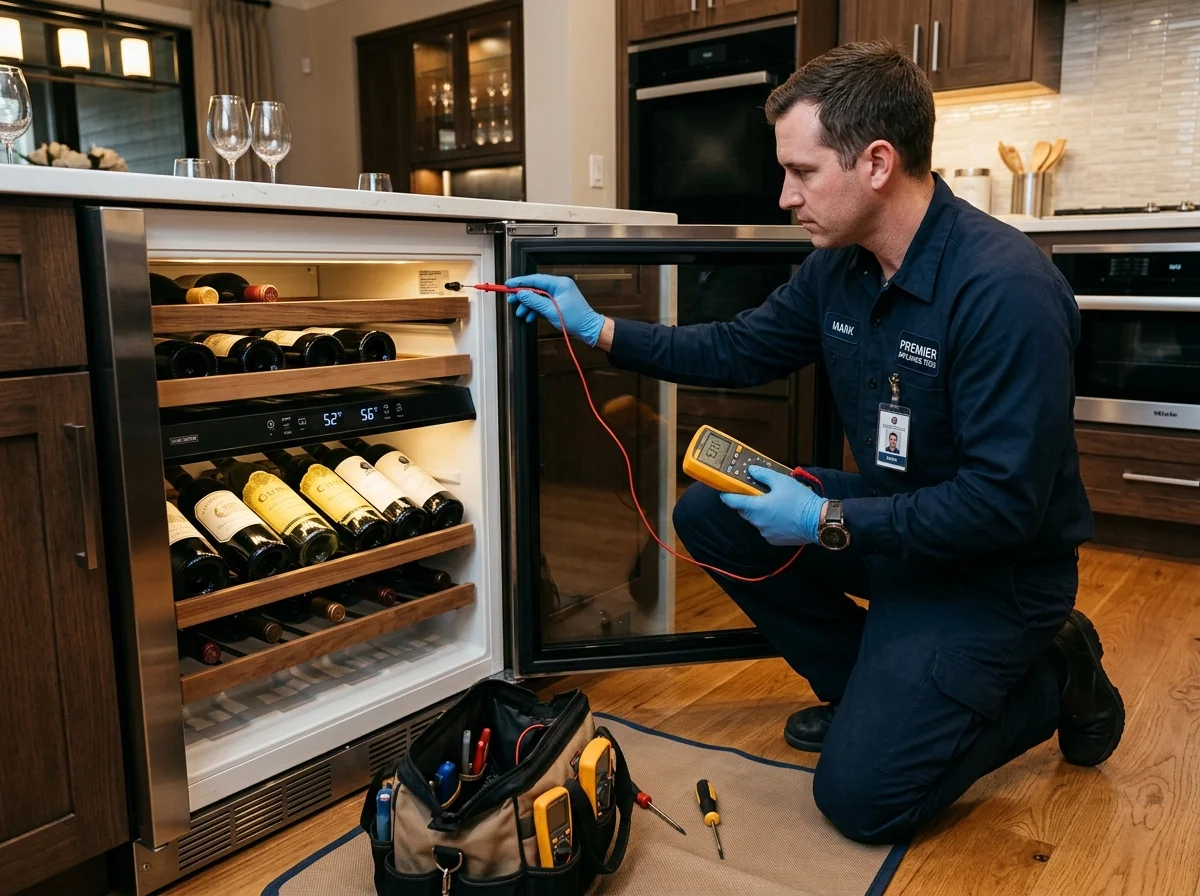 Leak Prevention
Stopping water pooling under crisper drawers and leaking onto kitchen hardwood. Clearing frozen defrost drains, replacing cracked water valves, and installing drain heater probes.
Learn More →
Brand Specialist
Permanent solutions for recurring Samsung ice room freeze-ups utilizing official factory service kit DA97-15217D, food-grade RTV cabinet sealing, and 22E fan motor repair.
Learn More →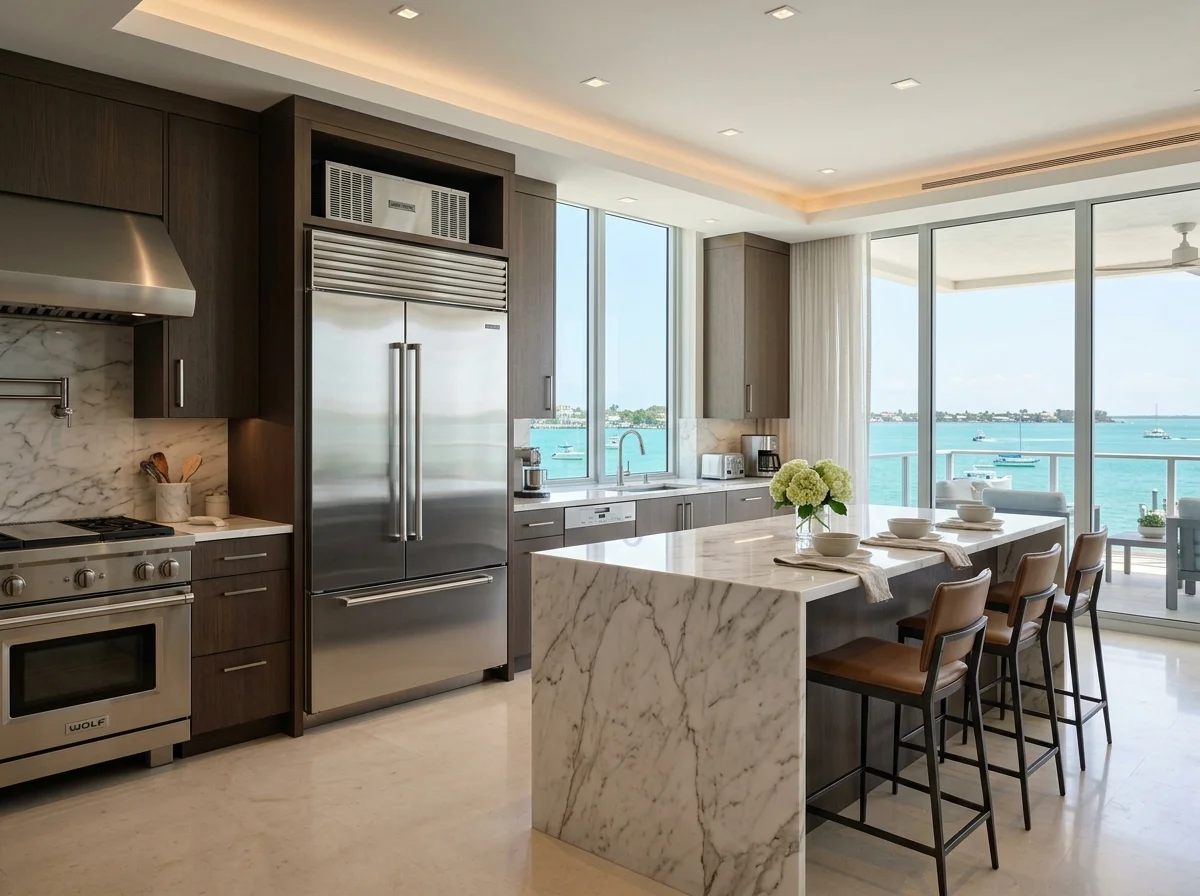 Luxury Built-In
Specialized dual-compressor diagnostics, electronic thermistor calibration, and condenser coil descaling for Sub-Zero, Thermador, Viking, and Monogram architectural appliances.
Learn More →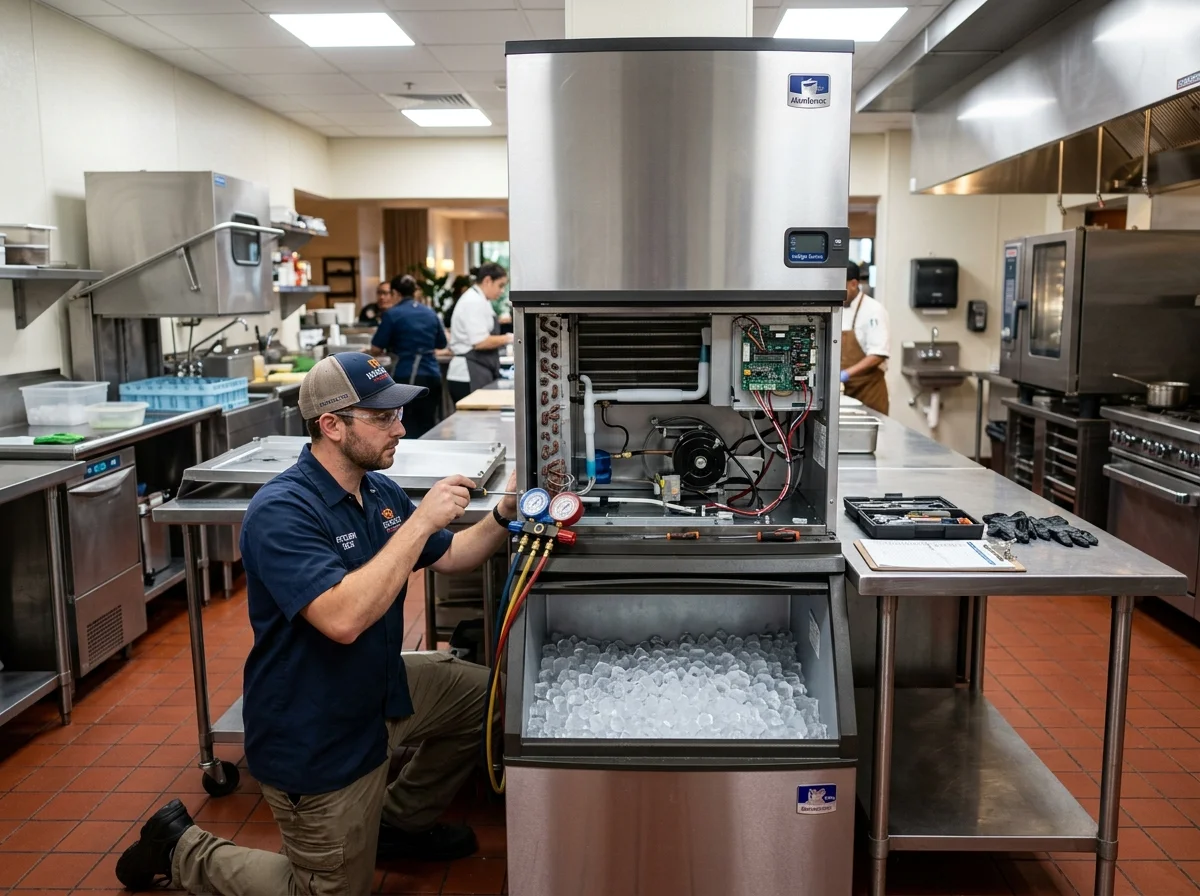 Commercial Hospitality
Rapid emergency repair, nickel-safe acid descaling, and EPA-registered sanitizing for Scotsman, Manitowoc, and Hoshizaki equipment in Clearwater restaurants, bars, and resorts.
Learn More →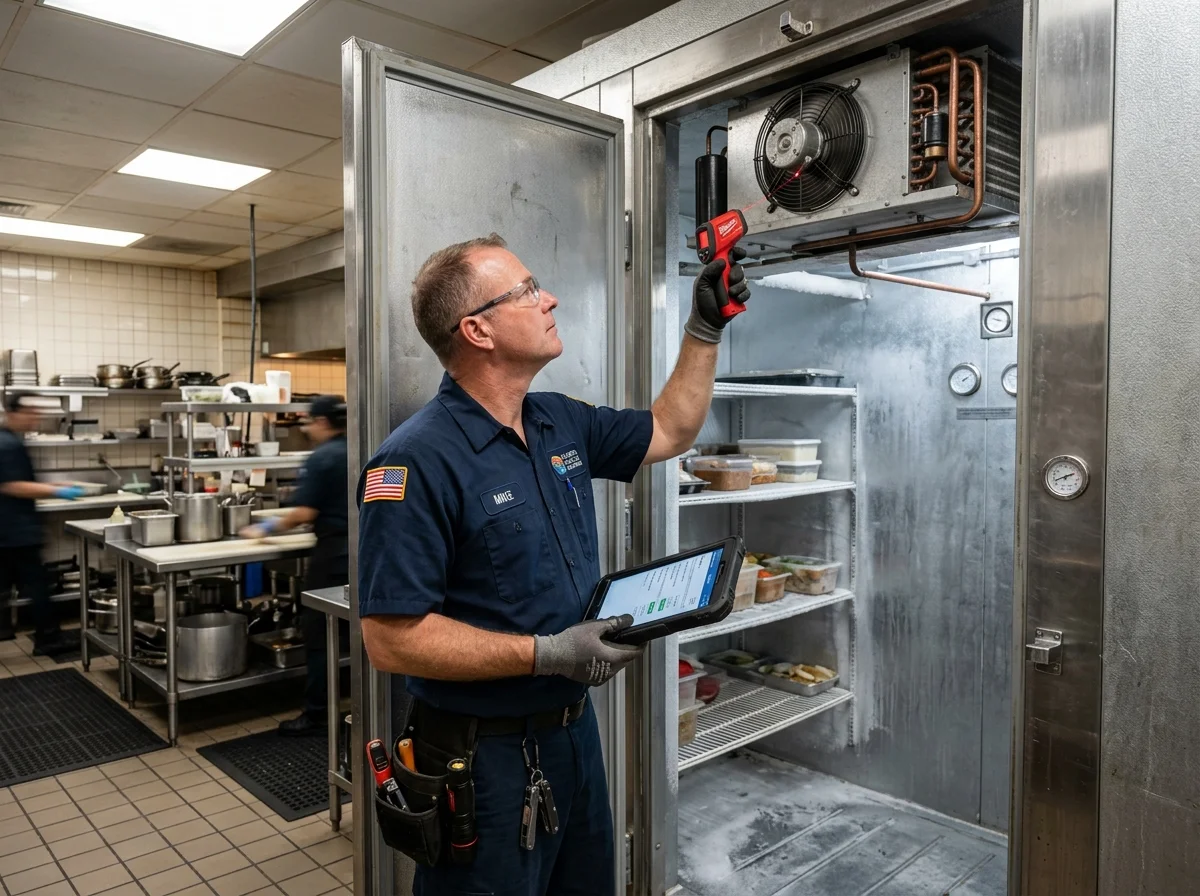 2-Hour Priority
24/7 priority emergency dispatch for commercial food service walk-ins, reach-in coolers, and display cases to maintain Florida DBPR and HACCP temperature compliance.
Learn More →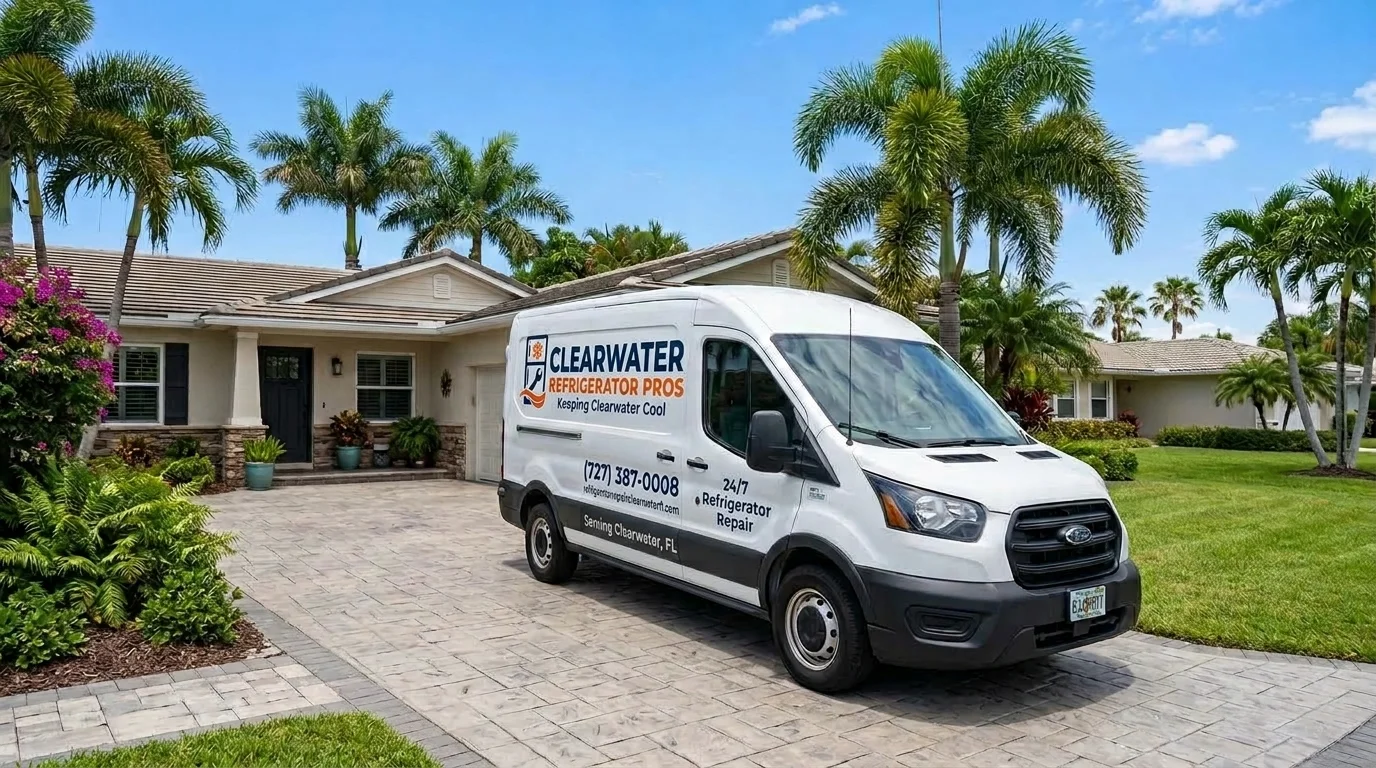 Mobile Fleet
Complete price transparency with zero hidden travel charges. The comprehensive in-home diagnostic fee ($79–$99) is 100% credited toward your total repair cost upon approval.
Explore Pricing →Screened, EPA-certified technicians handle all symptom-based, component, brand, and commercial cooling challenges across Pinellas County.
Operating refrigeration hardware in Pinellas County introduces distinct environmental stressors that accelerate mechanical failure:
Clearwater ambient humidity regularly reaches 85% to 95% from May through October. Every time family members open the refrigerator door, moisture-laden air rushes inside. If door gaskets are warped, brittle, or cracked, moist air constantly enters the cabinet, freezing onto the -15°F evaporator coils. Over 48 hours, this forms a solid glacier of ice that strangles airflow, leaving fresh food at dangerous room temperatures while the freezer remains frozen.
Properties along Gulfview Blvd, Island Estates, and Sand Key experience airborne salt fog that causes galvanic oxidation where copper refrigerant lines join aluminum condenser fins. In high-rise condos and waterfront homes, unmaintained condenser coils corrode and clog twice as quickly, causing head pressures to spike and compressors to burn out prematurely.
Thousands of homes in Countryside, Coachman Ridge, and Greenbriar keep secondary refrigerators or chest freezers in un-airconditioned garages. During Florida summers, garage temperatures exceed 105°F to 115°F. Standard residential cooling systems are engineered for ambient temperatures below 90°F. Without specialized garage-ready start relays and routine coil cleanouts, compressors run 24 hours non-stop and trip internal thermal safety switches.
Every service call follows an objective, non-destructive diagnostic process to eliminate guesswork and protect your investment.
We log your appliance brand, observed symptoms, and Clearwater address to route the nearest technician carrying matching OEM inventory.
Multimeter testing on compressor windings, thermistors, defrost heaters, and fan motors, plus inspection of the evaporator coil frost pattern.
You receive an upfront, binding quote with zero hourly surprises. The diagnostic fee ($79–$99) is 100% credited toward completed repairs.
Technicians install genuine factory parts from stocked vans, verify target temperatures, and provide a minimum 90-day parts & labor warranty.
From Gulf barrier islands to inland residential subdivisions, mobile technicians provide prompt same-day service throughout Pinellas County.
Beachfront condos, vacation rentals, and Sub-Zero luxury built-ins along Gulfview Blvd and Coronado Dr.
Premier waterfront canal homes and luxury dual-compressor refrigeration systems on Island Way.
Prestigious high-rise condominium towers and waterfront properties along Gulf Boulevard.
Cleveland Street restaurant district, downtown luxury condos, and rapid commercial kitchen dispatch.
Clearwater's premier historic estate district with custom wood-paneled Sub-Zero and Viking refrigeration.
Overlooking Clearwater Harbor bluffs, featuring coastal bungalows, villas, and bay breeze humidity care.
Single-family French doors, Countryside Country Club homes, and garage refrigerator heat overloads.
Executive residential estates near Coachman Park and Longmeadow; luxury multi-cooling units.
Quiet family neighborhood around Morningside Rec Center; prompt same-day defrost and fan fixes.
Central Clearwater community near Crest Lake Park; rapid emergency cooling and start relay repairs.
Lush wooded community along Old Tampa Bay; high summer humidity and luxury multi-cooling maintenance.
Beloved active adult and 55+ community; respectful, transparent service and upfront fixed pricing.
Established residential neighborhood off Nursery Road; dependable same-day capacitor and fan repairs.
Real experiences from local homeowners, property managers, and restaurant operators across Pinellas County.
"Our Whirlpool French-door stopped cooling on a Friday afternoon right before family arrived from out of town. The freezer was 10 degrees but the fridge was 56. Dispatch sent Mike out within two hours. He diagnosed a failed evaporator fan motor, had the exact OEM part on his van, and fixed it on the spot. Saved over $400 worth of groceries!"
"The salt air on Island Estates took a toll on our built-in 48-inch Sub-Zero condenser. Factory service quoted us a 3-week waiting list. Clearwater Refrigerator Pro connected us with an EPA-certified technician who arrived the very next morning, descaled the coils, replaced the fan motor, and recharged the system. Runs whisper quiet at 37 degrees!"

"Like thousands of Samsung French-door owners, our ice room was turning into an arctic glacier every three weeks. The technician installed Samsung's updated DA97-15217D service kit, sealed the cabinet with food-grade epoxy, and updated the firmware. It has been 6 months and we have perfect ice every single day. Worth every penny!"

"Living on the 10th floor of a Sand Key high-rise, an active refrigerator water leak is terrifying. The technician arrived with protective floor runners, isolated the cracked dual water solenoid valve, and replaced it cleanly. No water damage to our condo or our neighbors below. Prompt, respectful, and fully insured."
"Another company told me my 5-year-old GE Profile needed a $1,200 compressor replacement. I called for a second opinion. Dave's technician tested the start relay with his multimeter and proved the compressor was completely fine—it was just a $165 PTC relay! He saved me over $1,000. Rare honesty in home services."

"On a Saturday afternoon during spring break, our main walk-in cooler holding $14,000 worth of premium seafood and steaks began climbing past 42 degrees. Dispatch had a commercial refrigeration tech at our kitchen within 90 minutes. He diagnosed a blown defrost termination switch and had temperatures dropping before dinner rush."

Clear, upfront answers regarding repair costs, same-day scheduling, warranty coverage, and DIY vs professional diagnostics in Pinellas County.
In standard dual-compartment refrigerators, all active cooling takes place in the freezer evaporator coils. A motorized evaporator fan blows this chilled air through an adjustable air damper into the fresh food compartment. If the evaporator coils are choked with frost (due to a failed defrost timer, heater, or bi-metal thermostat), or if the evaporator fan motor burns out, chilled air cannot circulate into the fresh food section, leaving your milk warm while your ice cream stays rock solid.
Most common residential repairs in Clearwater cost between $150 and $350. Typical breakdowns include: compressor start relay ($130–$220), evaporator fan motor ($160–$280), defrost bi-metal thermostat or heater ($160–$290), or electronic control board ($220–$380). Complex sealed system compressor replacements range from $550 to $950. The initial diagnostic fee ($79–$99) is 100% credited toward your repair.
We provide same-day emergency dispatch across Clearwater, Dunedin, Safety Harbor, and Largo. In urgent scenarios involving food loss or medical refrigeration, technicians can frequently arrive within 2 to 4 hours of your initial phone call. Our vans are stocked with OEM parts to complete 85%+ of repairs on the spot during the first visit.
No. Our dispatch network maintains standard flat-rate pricing 7 days a week, including Saturdays, Sundays, and holiday emergency dispatches. You will never be hit with arbitrary overtime markups.
Yes. Dispatched specialists have extensive training on high-end built-in architectural appliances (Sub-Zero, Thermador, Monogram, Viking, True, and Marvel), including dual compressors, digital microprocessor boards, and vacuum coil maintenance.
Yes. All completed repairs carry a minimum 90-day parts and labor warranty, with many factory OEM replacement components backed by 1-year manufacturer warranties. If the repaired component fails during the warranty period, it is replaced at zero labor cost to you.