
Yes, but only if the appliance is specifically rated "garage-ready" or outfitted with an aftermarket high-ambient thermostat modification. In Clearwater, closed garage temperatures regularly exceed 100°F to 110°F with 85%+ relative humidity during the summer. Standard consumer refrigerators are designed for indoor climates (55°F–90°F); when placed in an unconditioned Florida garage, their compressors run non-stop, head pressures spike, condenser coils clog rapidly, and expected lifespans are cut in half.
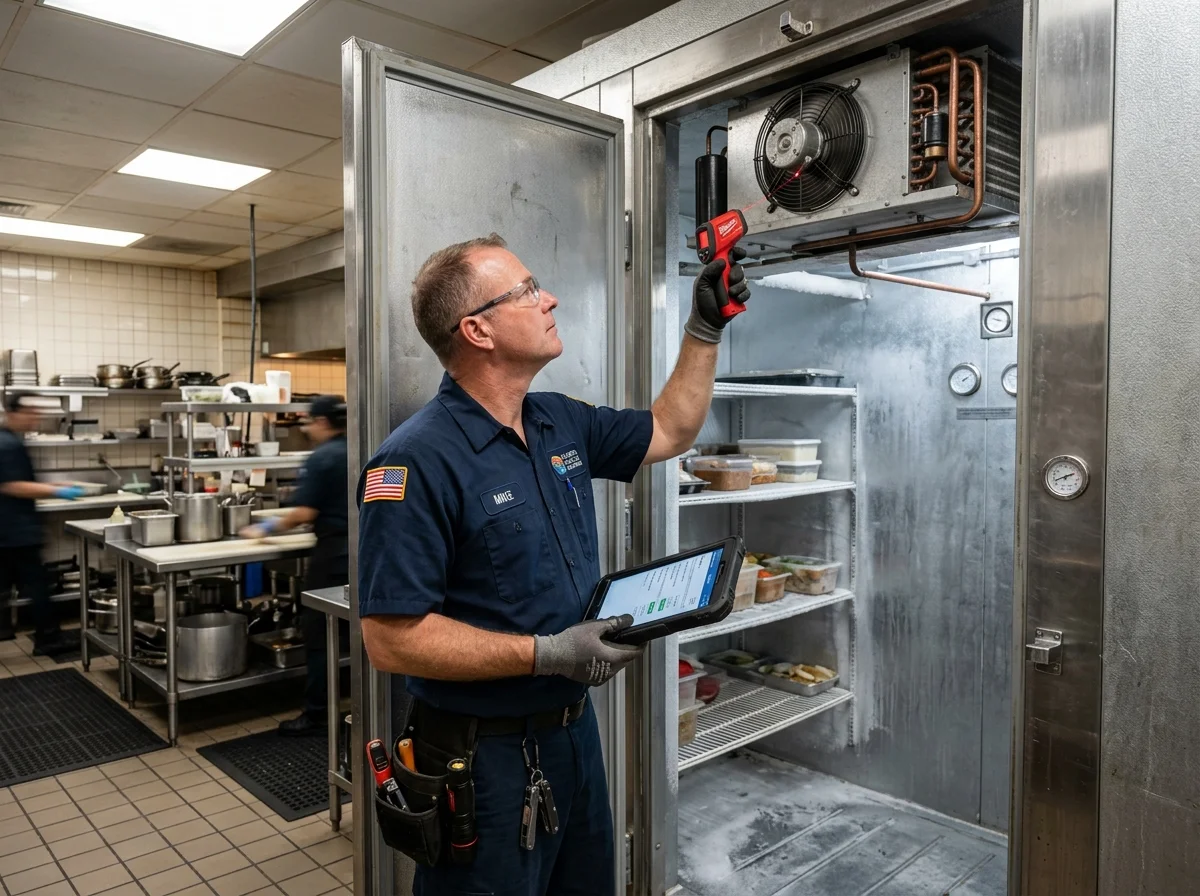
Keeping a secondary refrigerator or upright chest freezer in the garage for extra frozen meats, party drinks, and seasonal bulk storage is common practice throughout Pinellas County. However, moving an old, retiring kitchen refrigerator into an uninsulated Florida garage often leads to unexpected compressor failure within 6 to 12 months.
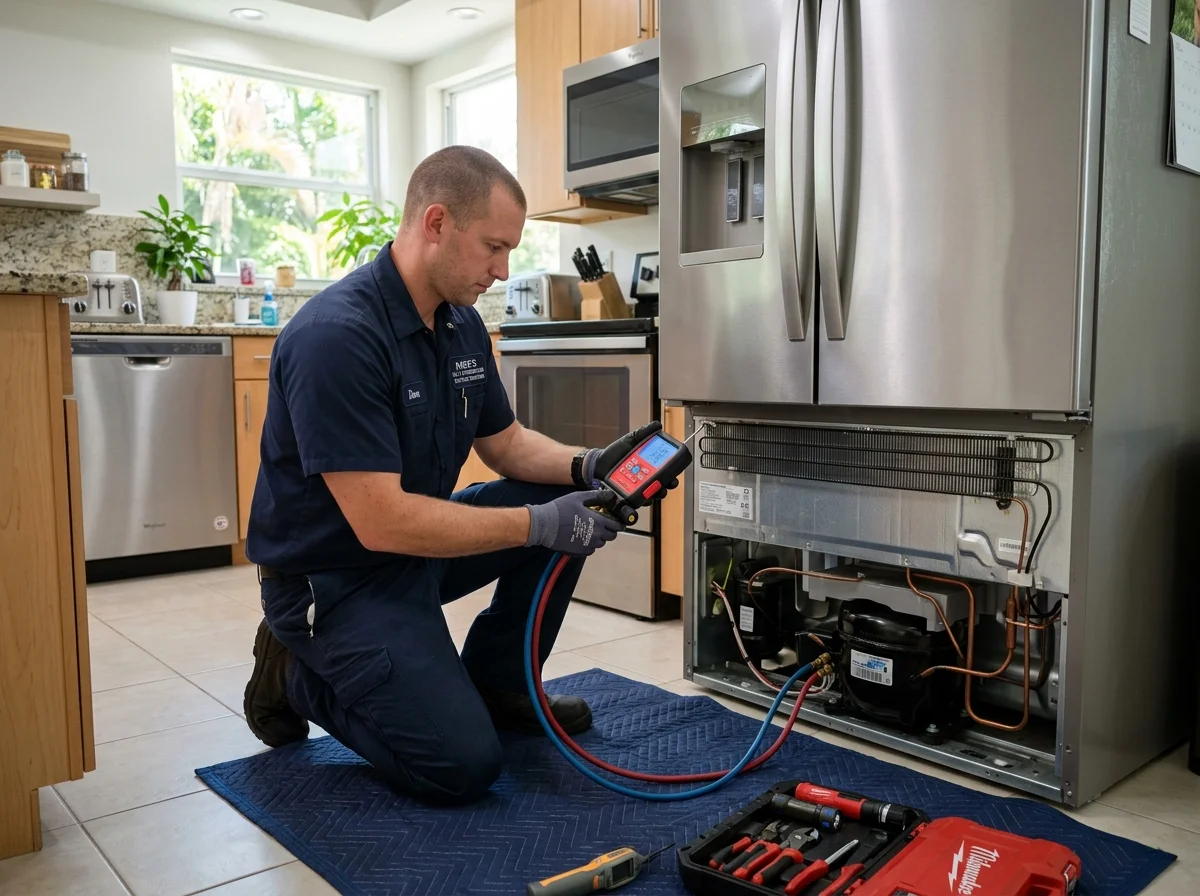
What Happens to a Standard Refrigerator at 105°F Ambient Heat?Refrigerators do not create cold—they extract heat from inside the cabinet and dump it into the surrounding room through the exterior condenser coils.
- Thermal Differential Collapse: When the garage is 105°F, it is extraordinarily difficult for a 115°F condenser coil to shed heat. The refrigerant cannot condense into a cold liquid efficiently, resulting in weak cooling.
- Continuous Duty Cycle: The compressor never reaches its thermostat cutoff point. Running 24 hours a day overheats internal electrical windings and drastically increases electric utility bills.
- Condensation & Cabinet Sweating: The extreme humidity in Pinellas County causes water droplets to form continuously on exterior door seams, eventually rusting steel hinges and soaking magnetic gaskets.
What Does "Garage-Ready" Mean?
Appliances specifically engineered as "garage-ready" feature:
- Heavy-Duty Commercial-Grade Compressors: Designed to dissipate heat and withstand high head pressures up to 110°F ambient temperature.
- Dual Thermostats: Traditional units monitor temperature only in the fresh food cabin. When winter cold drops garage air below 40°F, standard fridges assume they don't need to run, accidentally letting your freezer thaw! Garage-ready units monitor both compartments independently.
- Enhanced High-Density Foam Insulation: Thicker polyurethane insulation prevents heat migration through cabinet walls.
1. Maintain 3" Clearance
Never push a garage unit flat against drywall. Provide at least 3 to 4 inches of clearance on all sides and the top to allow airflow.
2. Clean Coils Every 4 Months
Garages collect sawdust, lawn clippings, and dust. Vacuum the condenser coils three times a year to prevent compressor lockup.
3. Install a Garage Heater Kit
For standard refrigerators, a small, inexpensive aftermarket heating strip tricks the thermostat into cycling properly year-round.
Standard refrigerators struggle when garage ambient temperatures exceed 100°F. Without adequate ventilation, compressors overheat and run continuously, drastically shortening their lifespan.
Garage-ready units are engineered with heavier insulation, dual-sensor thermostats, and heavy-duty compressors tested to operate smoothly in ambient temperatures from 0°F up to 110°F.
Keep at least 3 inches of clearance on all sides, clean the condenser coils every 6 months, and place a small circulating fan near the compressor base during peak summer heat.
Is Your Garage Freezer Struggling in the Heat?
A local technician can test your compressor and install high-ambient thermal kits.
Call (727) 387-0008 Today